|
Lately I've become obsessed with the concept of leverage. With the right tooling & some thoughtful configuration, a small team can produce output that would've required 3-5x the headcount just a few years ago. I've been experiencing this firsthand with Claude Cowork and spending a lot of time thinking about how to unlock this for every person at airCFO.
This exercise has me looking at the back-office tech stack through a completely new lens, and that's the focus of this issue. We just launched our All Systems Go Tech Guide, and I wrote about the forces reshaping how founders should select their tech stack in 2026. Let's get into it:
💡 The Key Hire You're Probably Overlooking
Tools aren't just tools anymore; they're becoming capable of actually doing the work. When software can enforce your expense policies, automate your month-end close, and send you a report on its progress as it goes, choosing a software tool starts to feel less like purchasing a subscription and more like hiring an early employee.
We're still early in seeing how this trend will play out, but it's clear that it's never been more important to choose the right tech stack from day 1. This essay is my attempt to describe how things are shifting so founders & operators can make smarter 'hiring' decisions with their software stacks. Read the full essay on LinkedIn.
🔦 Tool & Resource Spotlight: All Systems Go Tech Stack Guide
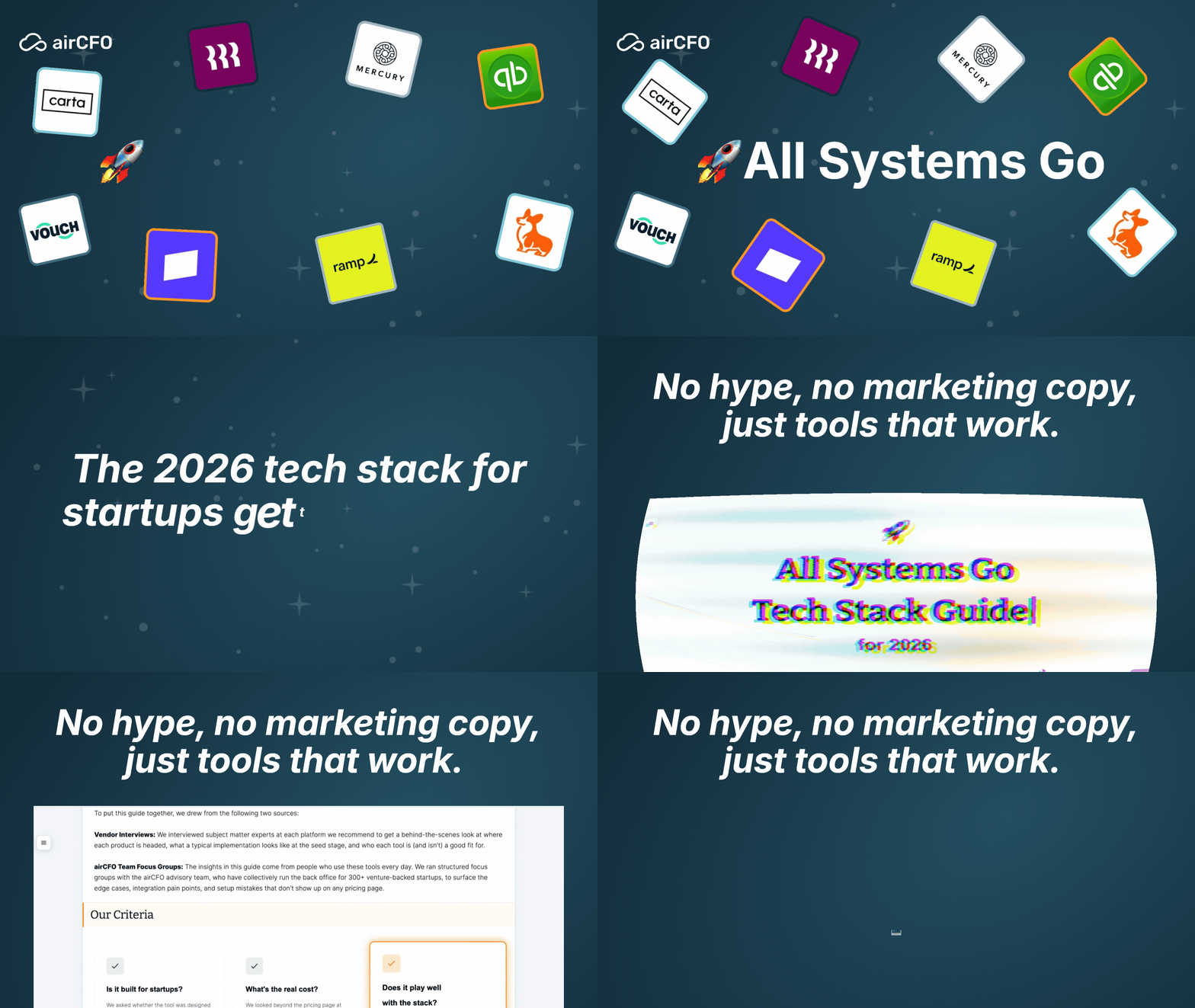
Every tool recommendation we'd make if we were building your stack from scratch today, across seven categories: General Ledger, Banking, Revenue Management, Expense Management, Payroll & Benefits, Cap Table Management, and Startup Insurance.
For each pick, you'll find:
- Why we recommend it, grounded in what our team sees working across 300+ clients
- Implementation tips you won't find on any pricing page
- What's coming next on each tool's roadmap
Read the full guide here.
🫀 The Ecosystem Pulse
(Article) Services: The New Software — Sequoia Capital
Julien Bek at Sequoia basically wrote down the thesis I've been operating off of at airCFO for the past few years. If you sell the tool, you're racing against the model. If you sell the work, every improvement to the underlying model makes your service faster and harder to compete with. The TAM math is pretty compelling too: for every $1 spent on software, $6 gets spent on services.
(Article) 2026 CFO Tech Stack Guide — Mostly Metrics
This is CJ's comprehensive tech stack guide. It's more quantitative than our All Systems Go guide, which makes it a solid complement if you want to do a deeper dive. He surveyed 1,364 finance leaders and cut the data by revenue stage, so you can find information that's relevant to where your company is right now.
(Video) Why Claude Cowork Is Already Changing Accounting Firms — Jason Staats
This is a great hands-on review of what Cowork can do for accounting and finance work. It even has real demos across bookkeeping, tax prep, and Excel workpapers. Worth watching if you want a ground-level look at where AI agents are at for this kind of work.
🤝 airCFO Content Connection

|
Funded: Andy Keil, Co-founder @ Dreambase
Andy and co-founder Kyle shipped 3 proofs of concept in 9 months and raised a $3.7M seed leading with a Notion memo over a pitch deck. We covered the failed raise that shaped his approach, why they added onboarding friction on purpose, and their micro-pod model. Really enjoyed this one.
|
That's all for this edition of The AI CFO - we'll be back in your inbox soon with more musings on the future of AI-powered finance & operations. Please reply to this email directly with any feedback/suggestions/just to say hi!
Cheers,
Alex Wittenberg, CEO @ airCFO
|